Meghalaya – A Journey Through the Seven Sisters of Northeast India
Saturday, 4th April 2026
View Post →
Saturday, 4th April 2026
View Post →
Saturday, 4th April 2026
View Post →
Friday, 3rd April 2026
View Post →
Monday, 30th March 2026
View Post →
Saturday, 28th March 2026
View Post →16 Days
Easy trek
3 Destinations
Max Altitude 4,000 meters
We also offer all of our tours as private tours – at your best time and with your desired program.
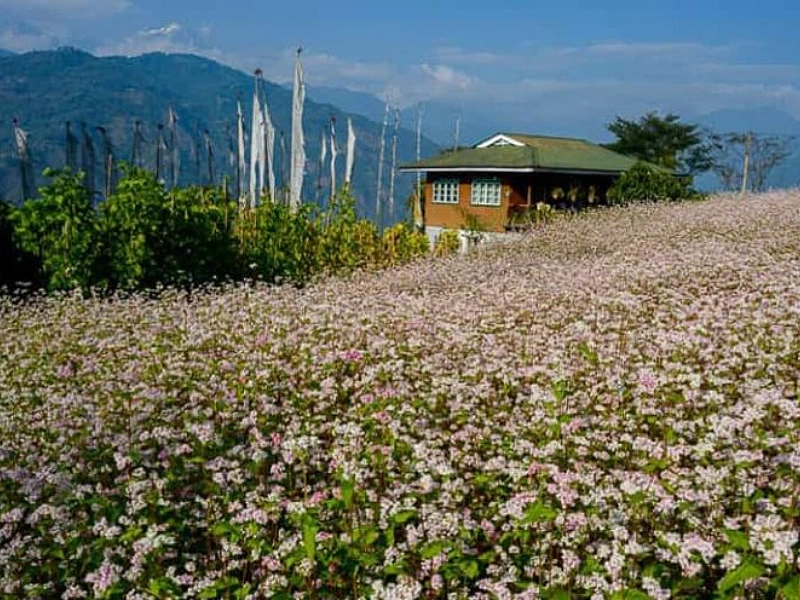
The small former kingdom of Sikkim lies between Nepal, Bhutan and Tibet and is now part of India. The region ranges from hot, subtropical locations of 300 meters to icy heights of over 8,000 meters. An impressive biodiversity can be found here in a very small area and many of the inhabitants work in agriculture. Fifteen years ago, the small Indian state had the visionary idea of switching to organic farming throughout Sikkim. Today, 66,000 small farmers do not use any pesticides or artificial fertilizers. With this unique project, Sikkim has become a beacon example for many other countries and regions.
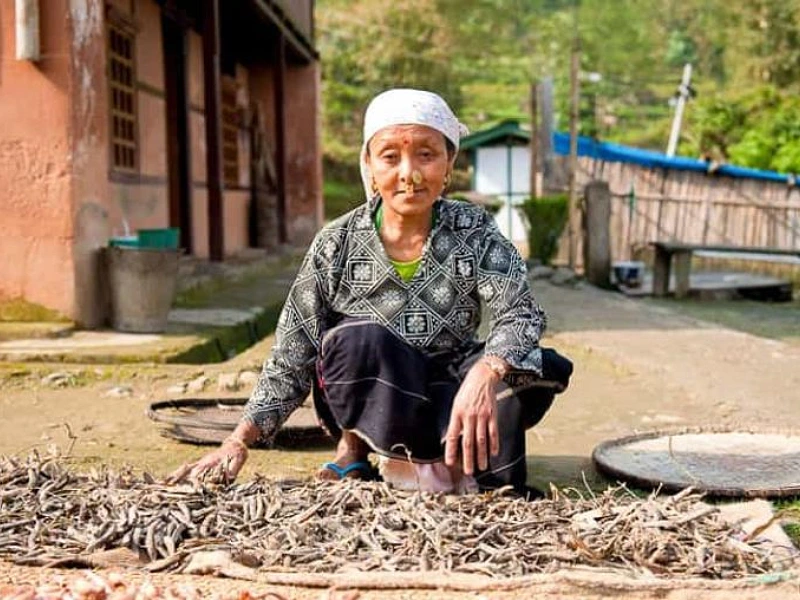
Our round trip will focuse on beautiful nature, scenic highlights and the life of the locals. We will have the opportunity to stay overnight with a local family and thus gain a wonderful insight into village and family life in Sikkim. We will also visit the most beautiful monasteries and oldest temples in this culturally very exciting region.
Flight to Delhi, the capital of India. On arrival, passport control and baggage collection. Our local partner will be waiting at the exit with a sign saying Himalaya Tours. He will organize the transfer to the hotel or the onward flight.
Note: Depending on the flight connections and arrival time in Delhi, we will spend the night here in a hotel or fly on to Bagdogra and spend the night in Shiliguri.
Overnight stay in a hotel in Delhi.
Total flight time 8-11 hours, with either a direct flight two flights with one stop.
We will fly along the Himalayas to Bagdogra. Weather permitting, we will be able to see the 8,000 meterpeaks of Dhaulagiri, Annapurna, Everest and Kangchendzönga. Our journey to Sikkim first will take us through the lowlands, then we will cross a dense forested area and the Tista River, whose source lies in the border area with Tibet in northern Sikkim. This will be followed by a varied ride past terraced rice fields and lush green subtropical forests. We will pass tiny hamlets, bustling villages and deserted jungles inhabited only by communities of monkeys until we reach the town of Gangtok, built on a hillside. This is the capital of Sikkim.
Overnight stay in a hotel in Gangtok (1,650 meters). (B,L,D)
Flight time 2 ½ h, travel time 5 h
After the long tour, we will take it easy today. We will set off on foot to the Gangtok bazaar. We will enjoy the hustle and bustle and maybe even make a deal or two. The Institute of Tibetology has one of the finest collections of Buddhist literature, as well as a large number of thangkas, bronze figures and cult objects. From there we will continue to the Do-Drul Chörten. Traditional crafts are taught at the Cottage Industries Institute. Traditional wood carvings, textiles and bamboo items are also available here.
Overnight stay at a hotel in Gangtok (1,650 meters). (B,L,D)
Driving time 1 h, hike 1 ½ h
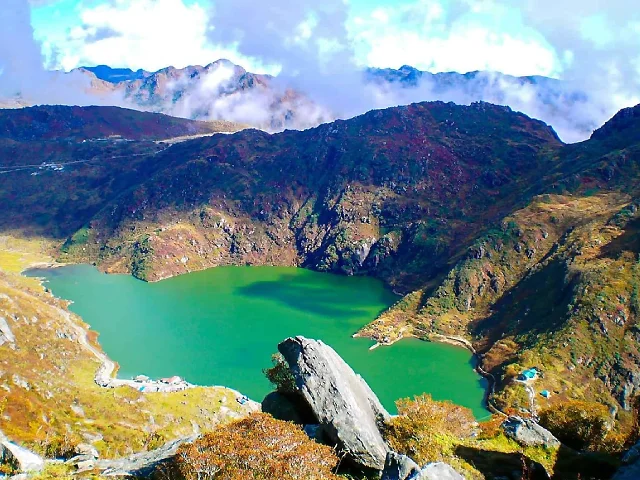
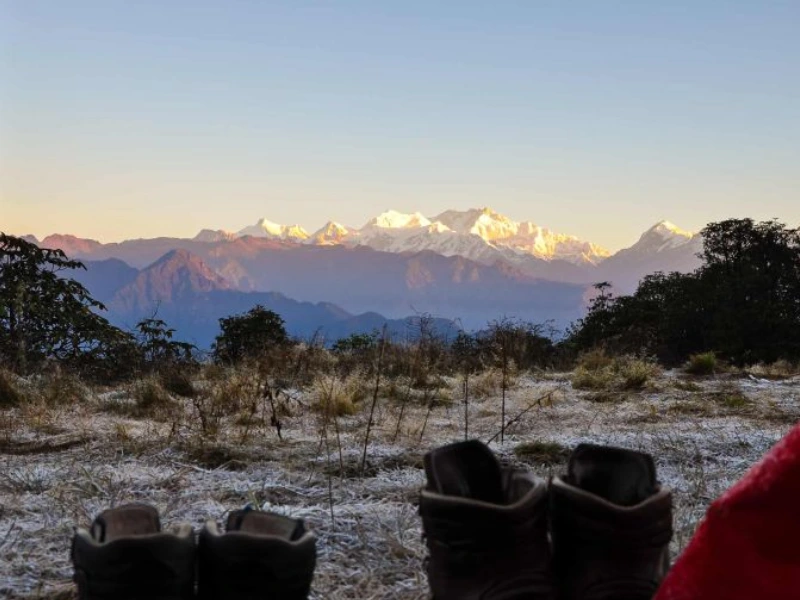
On the 4th day of our journey we will go on an excursion to Lake Tsomgo. After a two hour drive we will reach the sacred Tsomgo Lake, “source of water”, which is only 5 kilometers as the crow flies from the Tibetan border on the way to the Nathula Pass. During the winding drive, we will cross various vegetation zones from lush green to barren alpine. In ancient times, Buddhist monks are said to have predicted the future here based on the color of the water. Once we have reached the glacial lake, you will have the opportunity to try out a yak ride along the lakeshore (not included, can be paid for on site) or to climb up a nearby mountain ridge to almost 4,000 meters (45-60 minutes). In good weather, the ascent will offer a magnificent panoramic view of the Kangchendzönga (8,543 m), the seat of the patron god of Sikkim and the border area bordering Tibet. Good, sturdy footwear, warm clothing and possibly hiking poles are required. Towards the evening we will return to Gangtok and continue on to Rumtek on the opposite side of the valley. Here we will spend the night in accommodations that place great value on ecology. In the large garden, we will be sure to learn one or two exciting things about ecology in Sikkim.
Overnight stay at the hotel in Rumtek (1.350 meters) (B,L,D)
Drive time 4-5 h, optional hike 1 ½ – 3 h
We will experience an exciting and very varied day and gain a deep insight into rural life in Sikkim. After breakfast, we will take a hike on narrow paths across terraced rice fields to a small indigenous settlement. We will invited to visit the village shaman in a house built on stilts and will be allowed to witness a ceremony and enjoy a cup of tea together. Some of the villagers make their living from farming and we can learn exciting things about their field work and agriculture. It is impressive to see what easy means are still used to work in the Himalayas and much of the work is still done by hand. In the afternoon we visit the monastery “Lingdum Zurman Kharwang”. Inside the colorful complex, the murals tell of important events in the life of the Buddha. The cosmopolitan monastery also has an active monks’ school. The young monks can often be found memorizing the Tibetan alphabet or reciting mantras (powerful prayers).
Overnight stay at the hotel in Rumtek (1,350 meters). (B, L, D)
Driving time 1 h, hike 1 – 2 h
His Holiness, the 16th Karmapa, head of the Kagyu order of Tibetan Buddhism, lived here from 1959 to 1981. After fleeing to Sikkim due to the Chinese invasion of Tibet, he received asylum, land and support from the King of Sikkim to build the new monastery in Rumtek. His home monastery in Tsurphu in Tibet served as a model. During the 16th Karmapa’s lifetime, the monastery was an important pilgrimage site for Tibetan Buddhists. The Karmapa is one of the most important reincarnations in the Tibetan Buddhist world and the head of the Karma Kagyu school. This is one of the four main branches of Tibetan Buddhism. If you follow the road lined with prayer flags, you will come to the original old monastery of Rumtek, which dates back to 1734. It exudes a wonderful sense of tranquillity and is situated on a mountain ridge with fantastic views of the hills and fields of Martam. A small shrine in an adjoining room is dedicated to the protector of the Kagyu school, Mahakala. However, the figure is covered because of its powerful effect. Afterwards, a varied drive will take us first to the largest tea garden in Sikkim. The Temi tea garden is known for its excellent, organically grown tea and is an insider tip among connoisseurs. In the evening we will reach a typical Bhutia village. Here we will be guests in the home of a family and immerse ourselves in the culture of the Bhutia Sikkimese, who originally come from Tibet. We will end the evening with a traditional Bhutia dinner in the simple kitchen of our host family, followed by a small cultural performance around the campfire and a “Chang” beere, which is home-brewed from millet.
Overnight stay in an simple family house in Kewzing (1,550 meters). (B, L, D)
Driving time 4 – 5 h, hike 1 – 2 h
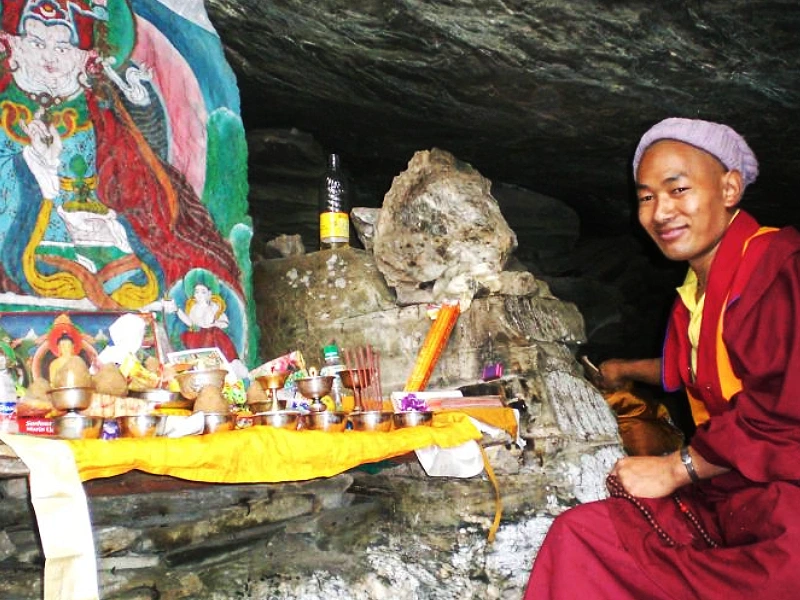
A beautiful hike takes us past small villages and across fields. We are amazed at how fertile Sikkim is and what can be grown here. The walk takes about two hours. Our destination is the sacred cave of Khangdusangpo, which has been used as a meditation cave for many centuries. Our vehicle then takes us to Tashiding. Next to the local monastery are several chortens. It is said that just seeing these chortens cleanses all sins. We can try this out! The prayer walls with the mantras artfully carved in stone are also beautiful. Unfortunately, the stonemason who created all these works of art passed away a few years ago. Yuksom is now just a village, but was once the capital of Sikkim. The most popular trek in Sikkim starts from here and leads to the Goecha La pass, which is almost 5000 meters high and close to the 8000 meter high Kangchendzönga.
Overnight stay at the guesthouse in Yuksom (1750 meters). (F,M,A)
Travel time 3 hours, hike approx. 2 hours
Today we have a longer hike planned and set off straight after breakfast. There is a lot to see in the gardens around the simple houses, between which we walk uphill. Spring is the flowering season and fall is the harvest time for black cardamom. The 1 to 2 meter high plants are widespread throughout Sikkim and used to bring the local farmers an important income until a disease caused many cardamom plants to disappear. The harvested capsule fruits are traditionally dried over an open fire in large stone ovens, giving the spice its smoky flavor. Our route first takes us to Dubdi Monastery, Sikkim’s oldest monastery, and then uphill to a small mountain village. Here we are invited to a traditional lunch with a local family. Afterwards, the family shows us the terraced plantations on the steep slopes around the house. It’s interesting to see what they grow. In addition to lots of vegetables, there are also roots and plants that are used to make medicine.
Overnight stay at the guesthouse in Yuksom (1750 meters). (F,M,A)
Hike approx. 4 – 5 hours
In the morning we will visit the coronation site of the first king of Sikkim. A small temple and a huge stupa herald the place where the empire was founded. We will take a walk to the Norbugang Chörten, where the coronation of the 1st king took place in 1642. Under a gigantic cedar (Cupressus cashmeriana) stands the stone throne on which Chogyal Phuntsok Namgyal was crowned King of Sikkim by three lamas from Tibet. Lhatshun Chempo gave the king his ancestral name, Namgyal – this was the beginning of the Namgyal dynasty. On our way to Pelling, we will take a beautiful hike, mostly uphill, to the sacred, wish-fulfilling Khecheopalri Lake. We will pass small villages, terraced fields and plantations where cardamom is grown. The original name of the lake was Kha-Chot-Palri, which translates to “the heaven of Guru Padmasambhava”. The small, legendary lake is sacred to both Buddhists and Hindus. At the end of the lake, we will continue through a varied landscape of terraced rice fields and remote settlements to a Sikkimese guesthouse below Pelling.
Overnight stay at the guesthouse below Pelling (1,700 meters). (B, L, D)
Driving time 3-4 h, hike 4 h
If the weather is good, it will be worth getting up early and driving to the Nyingma monastery Sanga Chöling before breakfast. From there, we will enjoy another fabulously beautiful view of Kangchendzönga and other snow-capped mountain peaks. From the monastery, we will walk to the Chenrezig statue, which was completed in the fall of 2018. The newly built complex also includes a skywalk and a gallery inside the statue. At a height of 41 meters, it is the tallest of the three large statues in Sikkim. After breakfast at the guesthouse, we will visit the famous 18th century Pemayangtse Monastery with its uniquely carved wooden sculpture. The monastery was involved in the royal government during the kingdom and played an important role in history. The Pemayangtse Monastery is also called the “Perfect Sublime Lotus”, which means “the all-encompassing, perfect lotus”. From the monastery, we will then hike to the ruins of the former royal fortress Rabdentse.
Overnight stay in the guesthouse below Pelling (1,700 meters). (B, L, D)
Driving time 2 h, hike 2 h
Our hike will take us through a jungle-like forest. We will arrive in a village inhabited by the Gurung ethnic group. This is an ethnic group that can also be found in many places in Nepal. The region is known to be very fertile. Our journey will take us to the village of Dentam, which is not far from the border with Nepal. Here we will stop at a cheese farm. We are not allow to visit the dairy itself, but we can stock up on Amul lassies or Gauda cheese if the store is open. We will continue past villages which are mainly inhabited by Nepalese ethnic groups. At the village of Rinchenpong, we will follow a dirt road for one more kilometer, which will lead us to our accommodations, a typical Bhutia farmhouse.
Overnight stay in an easy farmhouse lodge in Rinchenpong (1,600 meters). (B,L,D)
Driving time 2 h, hike 2 – 3 h
On this day we will discover the rural surroundings of Rinchenpong on foot. We will first hike through an oak forest to a nearby hill where there is a lonely monastery and, if we are lucky with the weather, we can enjoy a beautiful panoramic view of the surrounding mountains and the Kangchendzönga massif with the mountain giants Pandim, Kabru and Narsing (1,900 meters). Later, we can discover the lonely hamlets with their traditional Lepcha houses and experience the rural, natural way of life of the small farmers. In the evening, we have the opportunity to attend the ceremonies and evening prayers in the village monastery.
Overnight stay in an simple farmhouse lodge in Rinchenpong (1,600 meters). (B, L, D)
Hike 4-6 h
From Rinchenpong, our tour will continue to the Darjeeling region in the state of West Bengal.
We will leave Sikkim and have an interesting journey to the “tea city” of Darjeeling.
Overnight stay in a hotel in Darjeeling (2,100 meters). (B, L, D)
Driving time 4 – 5 h
If the weather is good, we will set off early in the morning for Tiger Hill (2,590 m). We can enjoy a spectacular sunrise and a fantastic view as far as the Kangchendzönga massif, the third highest mountain in the world. And if the weather permits, you can see as far as Mount Everest. Afterwards we take the famous “Toy Train”, which was built over 120 years ago. The ride on this narrow-gauge train is an exciting experience. After lunch we will visit a tea plantation for which Darjeeling is so famous. The main harvest time is March to October. Depending on the season, there is less activity in November and no tea is harvested during the winter months.
Overnight stay in a hotel in Darjeeling (2,100 meters). (B, L, D)
Travel time 2 – 3 h, train ride 2 h
On the morning of our 15th day, we will drive to Bagdogra, where our journey comes to a full circle. From here we will fly back to Delhi, where we will have a day room in a hotel. We have the opportunity to freshen up for the return flight and eat at the hotel.
In the afternoon/evening (depending on the flight connections), we will drive to the airport, where we will check in for our return flight to Switzerland.
Day room at the hotel in Delhi. (B, L, D)
Flight time 2 ½ h, travel time 3 – 4 h
Flight from Delhi to Zurich. We will return with a lot of impressions and experiences in our luggage.
Total flight time 8-11 hours. Either with a non-stop flight or with two flights with one change.
The times given are generally pure driving or walking times. Breaks, stops etc. are also included. The times given are average values based on experience, but may vary depending on road, trail and weather conditions, the fitness of the participants or for other reasons. The altitude data (for trekking tours) are based on satellite data. These may vary due to walking alternative routes, climbing additional viewpoints, detours due to weather or trail conditions, etc. We expressly reserve the right to make changes to the program (due to road, trail and weather conditions, flight delays, instructions from the authorities, water level or occurrence on the trekking route, etc.)!